Ascilion’s microneedles set to transform preventive healthcare
Just beneath the skin lies a treasure trove of health data. The problem is that no one has found a reliable way to extract it. Until now. At Ascilion in Kista, a quiet but significant breakthrough in global preventive care may be taking shape – with the potential to open a billion-dollar market.

Photo: Jonas Borg
Just beneath the skin lies a treasure trove of health data. The problem is that no one has found a reliable way to extract it. Until now. At Ascilion in Kista, a quiet but significant breakthrough in global preventive care may be taking shape – with the potential to open a billion-dollar market.
“With our technology, you can access 5,000 biomarkers without a blood test,” says CEO Simon Grant.
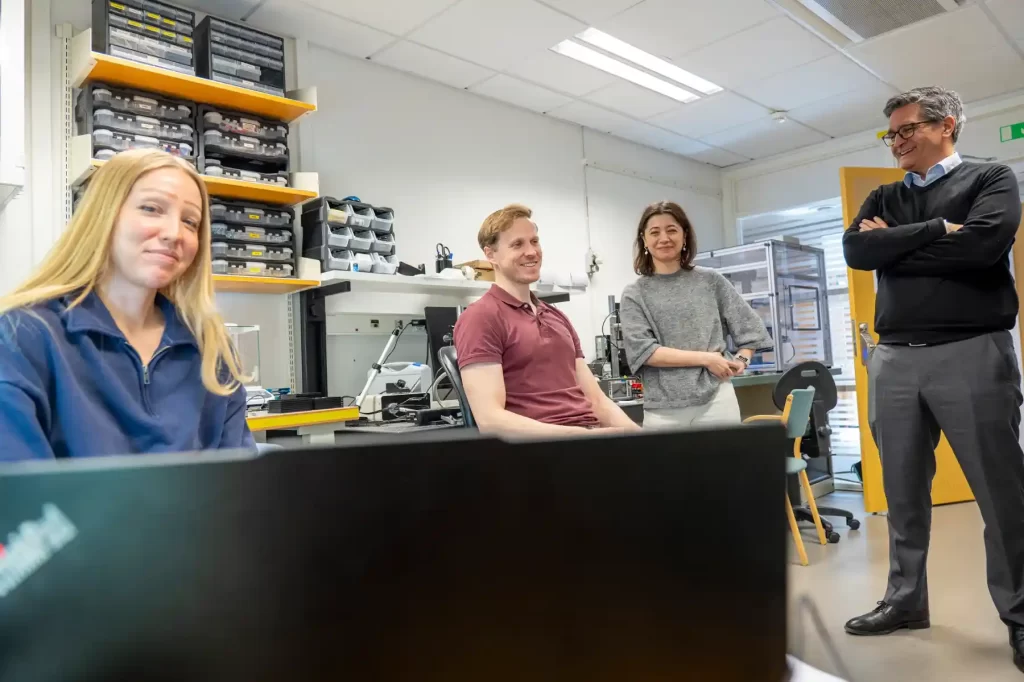
80 patents, one advanced medical device
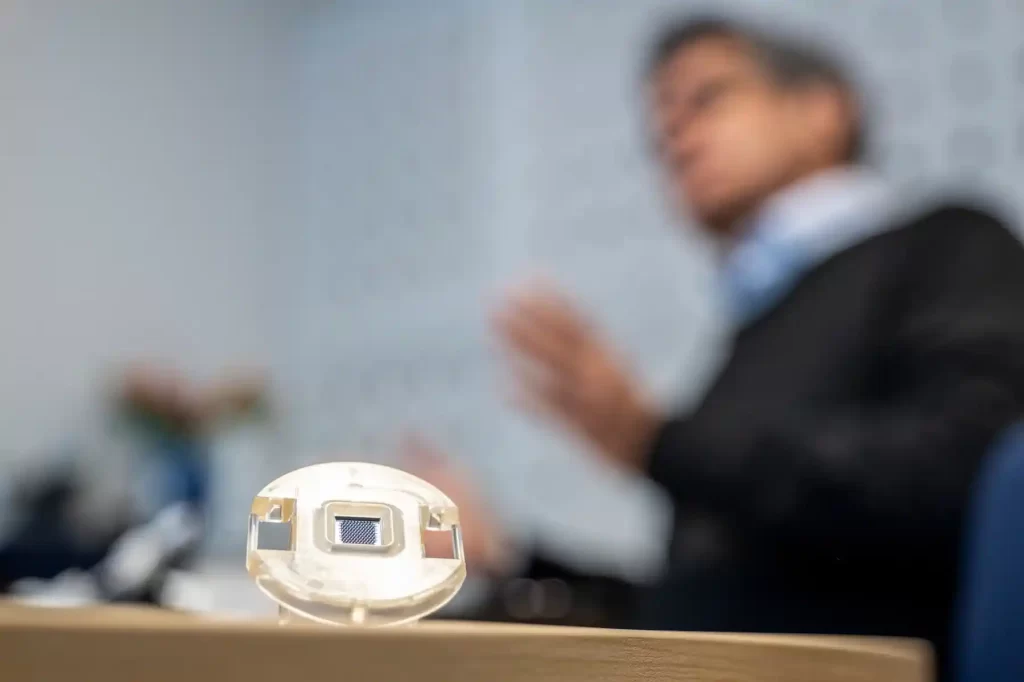
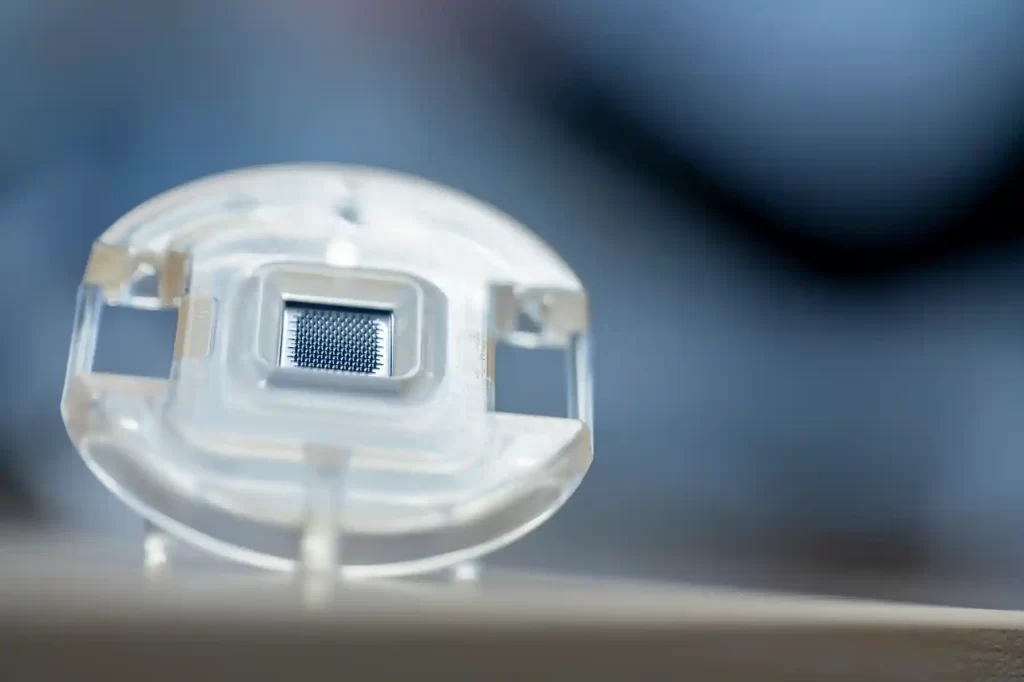
The device looks something like an insulin pen crossed with a games console – think early Nintendo. A stamp-like pad studded with hundreds of tiny needles is pressed against the forearm. It feels a bit like Velcro to the touch. The demonstration isn’t the finished product, but it illustrates just how straightforward the process could be.
It’s possible that, right here in Kista, an innovation district on the outskirts of Stockholm, Sweden, we’ve just caught a glimpse of a key to the more preventive healthcare systems of the future.
Even though it has just 11 employees, Ascilion is hardly a startup in the conventional sense. The founding team has spent 15 years working towards where they are today: close to 80 patents and an advanced medical device in which microneedles play the starring role. The underlying technology is known as MEMS – micro-electromechanical systems.
To understand the opportunity, it helps to know what sits 0.3–0.6 millimetres beneath the skin. Between the body’s cells runs a fluid called Interstitial Fluid (ISF). We have more of it in our bodies than we have blood. The layer closest to the surface is known as dermal Interstitial Fluid, or dISF, and it is dense with biological information.
“dISF acts as a bridge between the blood and the cells. It gives you access to 99% of the nearly 5,000 biomarkers found in blood. Right now, dISF is probably the most expensive liquid in the world,” says Simon Grant, CEO of Ascilion.
Obsessed with the potential
Grant joined as an adviser nearly three years ago. And he quickly became obsessed with what the company had built. He took on the role of COO, and eventually CEO. In many ways, he’s the right person for the job. The New Zealander has a long track record of nurturing medtech products all the way from the lab to market, around 30 in total by his own count. That’s the experience he’s now bringing to bear as Ascilion looks to make its mark globally.
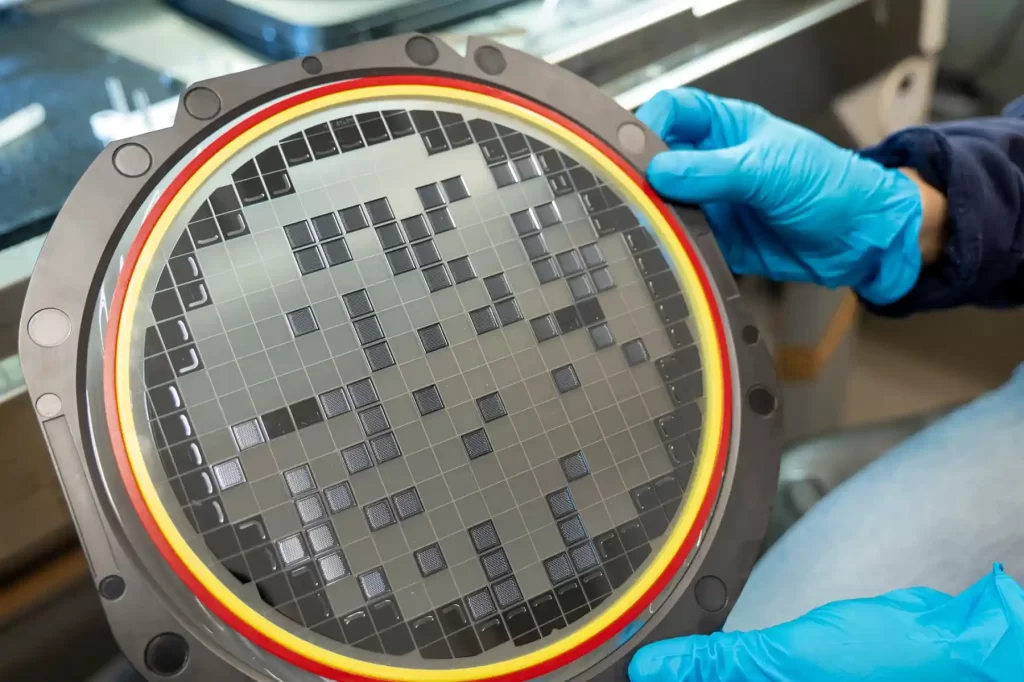
Ascilion’s home in Kista is no accident. Sweden, and the institutes KTH and RISE, have a strong legacy in advanced MEMS research and development. The Nordic country is also home to one of the world’s most advanced production facilities in the form of Silex Microsystems.
Ascilion’s microneedles are built on silicon structures with clear ties to semiconductor technology. The office sits next door to RISE – just a few floors above the Electrum Laboratory, where RISE and KTH run some of Sweden’s most advanced semiconductor environments.
Key supplier to global giants
Using dISF for measurement is not, in itself, a new idea. Continuous Glucose Monitors (CGMs), used primarily by diabetics, already measure glucose levels in dISF. This is done via a small needle-mounted sensor that typically stays in the skin for around a fortnight. It’s already a billion-dollar market. But, as Grant points out, it took 25 years to get to the point of analyzing a single marker. That’s how hard this is.
“Our technology is aimed at extracting dISF itself. And in doing so, making life easier for customers who want to measure other molecular biomarkers,” he explains. “That makes our solution a shortcut to a whole range of diagnostic and wellness products.”
Grant sees enormous potential in unlocking the breadth of biodata that lies just beneath the skin.
“We’re well ahead of the rest of the market when it comes to microneedles and dISF extraction,” he says. “For AI to become truly meaningful in preventive health, you need to be analysing far more biomarkers than is currently possible – and far more frequently. We’re convinced that the wearables of the future will use our technology to make that happen.”
Ascilion has no ambitions to compete with the likes of smart watches and sleep rings. Instead, the company is already a component supplier to several businesses that see the technology as the enabler of an entirely new era in medical devices.
“Who we work with isn’t public, but a handful of our clients are the biggest in the world in their respective fields,” says Grant.
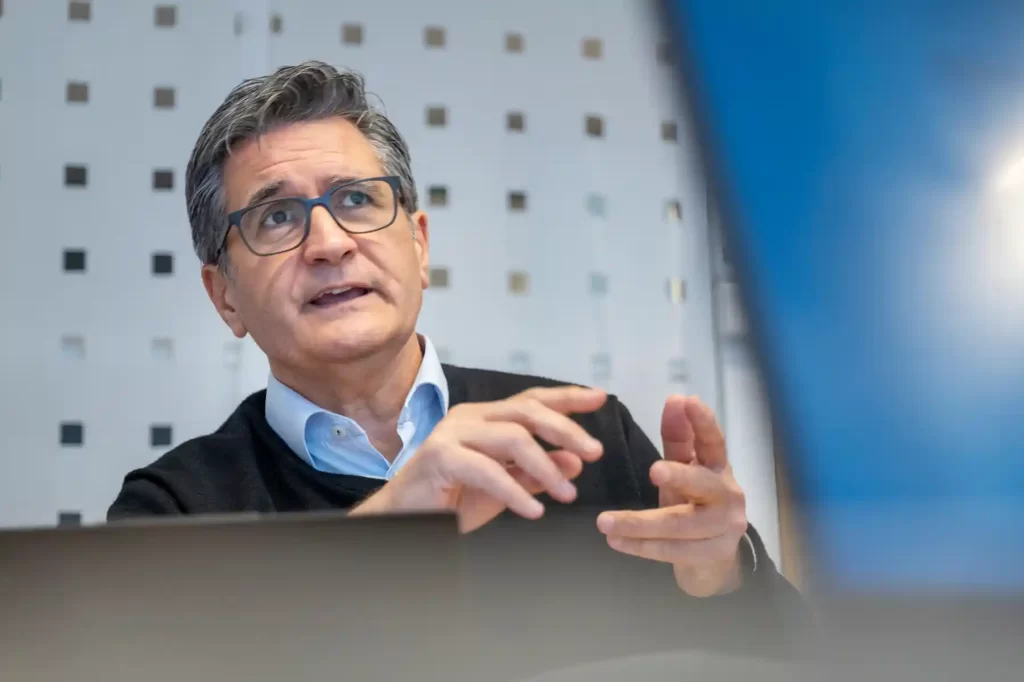
From Kista to the global healthcare market
The potential applications are wide-ranging. But Grant sees wearables as the area with the greatest upside. Pain-free sampling, above all, makes it possible to monitor an individual’s biomarkers continuously over time. Many times a day, in fact, much like today’s CGM devices – but across a far broader range of markers.
“In the future, you’ll be able to continuously measure individual markers such as cortisol, lactate, cholesterol and p-tau – a marker that indicates the presence of Alzheimer’s,” he says. “IVF is a huge market, as is Parkinson’s disease. There’s also enormous interest from pharmaceutical companies in understanding the effects of new drugs.”
How do you see your business model evolving?
“Right now, we sell our equipment to laboratories and research divisions at larger companies. The next step is to develop new products together with our customers – combining the small microneedle plate with their sensors. Since each patient needs a new one after a few days or weeks, you need high volumes. That’s where MEMS works well, because it has the same manufacturing economics as standard semiconductor chips.”
And when might we see your technology in consumer wearables?
“It takes time to get there, but that’s absolutely the goal. Everyone wants to be able to measure biomarkers with a wearable under the skin – I think it could happen within a couple of years.”
From Kista to the edge of reality
Kista is Stockholm’s buzzing deeptech district – a place where research labs, startups and global tech giants collide just fifteen minutes from the city centre. Want to know more about Kista? Read more here.